


Key Takeaways
- A modern B2B SEO strategy extends beyond traditional Google rankings.
- Accounting firms, nonprofits, and other professional services organizations need visibility across the platforms their audiences actually use.
- Multichannel SEO requires more coordination, expertise, and ongoing measurement than a website-only strategy.
- The goal is not to appear everywhere. It is to appear consistently in the places where prospective clients research and evaluate providers.
The Reality of Modern Multi-Channel SEO
SEO isn’t what it used to be. It’s more than just search engines now. If you want your brand, service, or product to get true visibility, you have to think strategically about every channel your audience uses.
Now, if you're working with a great strategist or a consulting agency that understands SEO, then it's going to be seamless. They'll help you build visibility across these other avenues.
That means leveraging Google, Bing, YouTube, social platforms, voice assistants, business directories, and sometimes even marketplaces like Amazon. Focusing just on traditional SEO is like only building the front of a house and leaving the sides and back open.
What Is Multichannel SEO?
Multichannel SEO is the practice of improving your company’s visibility across the different platforms potential clients use to research services, compare providers, and make purchasing decisions.
That may include Google, Bing, YouTube, social media, business directories, maps, and AI-powered search tools.
Potential clients rarely make high-value decisions after a single Google search. The goal is not to appear everywhere for the sake of it. It is to build visibility across the channels your ideal clients actually use.
They may read an article, visit your LinkedIn page, review case studies, and then ask an AI tool for recommendations before ever contacting you
Why Work with an SEO Strategist or Agency?
You may be wondering whether your internal marketing team can manage this alone.
In some cases, it can.
Here’s my honest answer as an SEO consultant: Good SEO takes expertise, technical experience, and ongoing execution. Often, marketing teams are already spread across multiple other departments supporting sales or in-person outreach.
A strong SEO team should understand how to connect search visibility with your broader organizational goals.
What Makes a Strong SEO Partner?
- Broad industry expertise: They have experience with companies similar to yours.
- Up-to-date tactics: They know the latest best practices and algorithm changes.
- Customization: They tailor their strategy to your actual business needs.
- Technical know-how: SEO is both creative and technical.
- Results focus: Expect measurable outcomes, not just buzzwords.

Seamless Integration Across Marketing Channels
A key benefit of hiring a digital marketing expert is that your presence isn't limited to a single area. They make sure:
- Your website is optimized for search engines (SEO basics and advanced).
- Your business shows up in Google Maps, Yelp, and other directories.
- Your videos are findable on YouTube.
- Social media posts are discoverable by your target clients.
- All channels reinforce one another in the customer journey.
For professional services firms, trust is built over time.
The more consistently your expertise appears across credible channels, the easier it becomes for a prospective client, donor, candidate, or referral partner to recognize your organization as a strong option.
Understanding Multi-Channel Visibility
Since the rise of ChatGPT in 2023, your audience now checks multiple channels before making decisions. They’re using search engines, voice search, video platforms, review sites, and even AI-driven results like Bing Chat or Google AI Overviews.
Try this:
Open an incognito tab and search for your core service, alongside your city. Do you show up in the organic results? How about the map? What about “People also ask” answers?
What Are “Other Avenues” in SEO?
Here are just a few examples:
- Google Search: Organic rankings, Knowledge Panel, snippets
- Google Maps and Local Pack: Critical for local businesses
- Voice Search: Siri, Alexa, Google Assistant
- YouTube: Video SEO, channel rankings, suggested videos
- Bing and Yahoo: Very popular in financial and nonprofit industries
- Social Media Search: Instagram, Facebook, TikTok, LinkedIn
- Review Sites: Yelp, TripAdvisor, G2, industry-specific directories
- E-commerce Platforms: Amazon, Etsy, Google Shopping (for products)
- Third-party content & backlinks: Guest blogs, podcasts, news articles
Resource Allocation: Budget, Time, and People
Here’s the part most company leaders don’t want to hear:
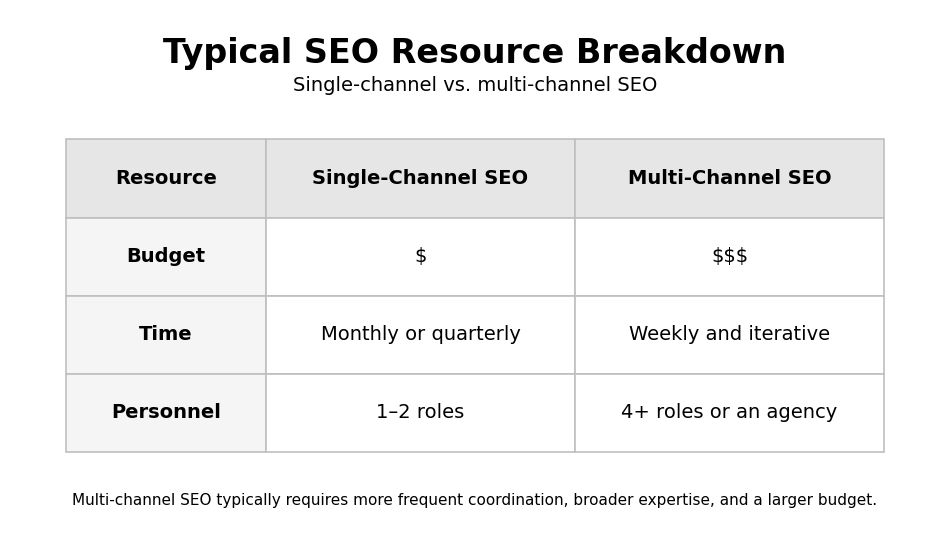
You do need to understand that this may require more resources, budget, or time to make sure you are found in these other places.
Being visible across every major platform isn’t cheap or easy. But it’s also possible for nearly any serious business—if you plan for it.

What Resources Will You Need?
1. Budget
More channels = more cost....but also more ROI. Expect costs for tools, content creation, ad spend, directory listings, and technical SEO.
2. Time
Don't expect overnight results. Multi-channel strategies take disciplined, ongoing work.
3. People (or external support)
Content writers, editors, technical SEO specialists, designers, social media managers.
Why the Extra Investment Pays Off for SEO
- Lower overall Cost-Per-Acquisition (after ramp-up)
- Higher Share-of-Voice in your market
- Resilience: Algorithm update on Google? You still get leads elsewhere
- Better first impressions: Customers see you everywhere, not just once
For many professional services organizations, subject-matter experts provide the insight while the marketing team or agency turns that expertise into searchable, useful content.
Action Plan: Steps to Multichannel SEO Success
Ready to make this happen? Here’s my recommended process (the same I use with clients):
1. Audit Current Visibility
Search for your core terms across Google, Bing, YouTube, Maps, and review sites.
Check for consistent branding, messaging, and presence.
2. Prioritize Channels
Identify where your customers actually spend time.
Start with the two or three channels most relevant to your audience.
For many professional services firms, that may be:
- Website and Google/Bing
- Industry publications or directories
Other organizations may benefit from YouTube, local search, webinars, podcasts, nonprofit platforms, or association websites.
3. Set Goals & KPIs
Examples include:
- Qualified website leads
- Consultation requests
- Phone calls
- Contact form submissions
- Proposal requests
- Candidate inquiries
- Donor or volunteer interest
- Newsletter signups
- Branded search growth
- Visibility for priority services
- AI referral traffic
- Video engagement
4. Resource Assignment
Who owns what channel? Is it in-house or via an agency?
When I work with my clients, I always clarify:
- Who provides subject-matter expertise?
- Who approves content?
- Who manages the website?
- Who owns LinkedIn?
- Who tracks leads?
- Who reviews performance?
- What will be handled internally?
- What requires outside support?
5. Optimize Each Channel
- Website: Technical and on-page SEO
- Maps: Fill out every field, gather and respond to reviews
- Social: Use keywords, hashtags, consistent cross-promotion
- Video: Upload, script, and optimize videos with closed captions and keyword-rich text
- Review Sites: Build reputation, respond to reviews, keep info updated
6. Track & Improve
Use analytics tools (Google Analytics, Search Console, YouTube Studio) to track and measure data. Adjust based on which channels are bringing returns.
Visualizing Your SEO Roadmap
A clear, visual roadmap helps to keep everyone—owners, marketers, and your agency—on the same page.
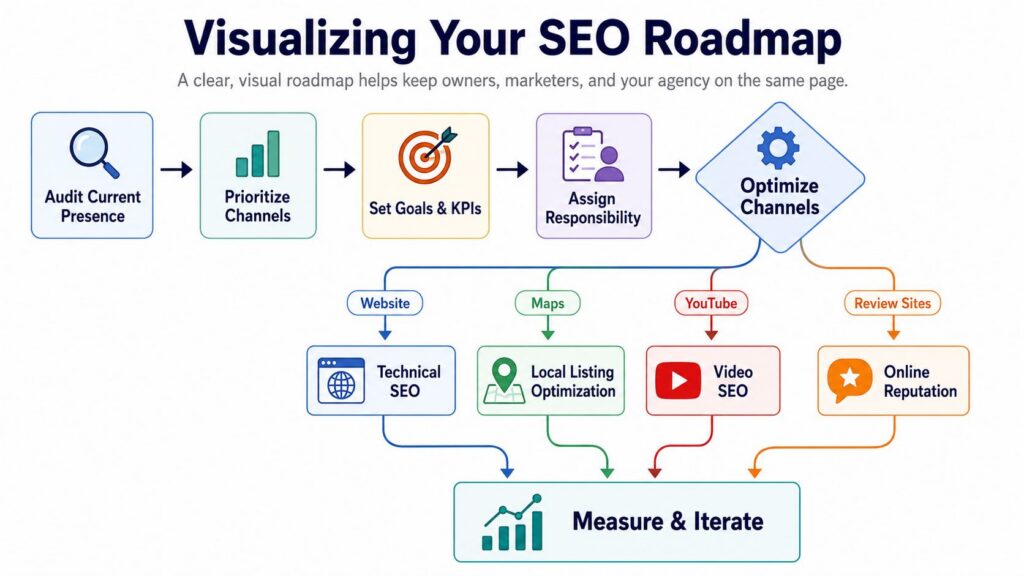
Building out visibility “across the board” is work—but it makes your brand stronger and more discoverable everywhere that matters.
Expert Tips for Seamless B2B SEO Strategy Execution
Here are a few nuggets I share with clients all the time:
1. Establish NAP Consistency
NAP = Name, Address, Phone
Make sure this matches on every listing, website, map, and social account.
2. Don’t Neglect Reviews
Encourage happy clients to leave feedback on Google, Yelp, and industry sites.
3. Repurpose Content
Turn one high-quality blog post into:
- A YouTube video
- A set of social media graphics and posts
- An email to your list
- A FAQ page for voice search
4. Stay Data-Driven
Look at the analytics. Don’t guess where your customers come from—know.
5. Get Help When Needed
SEO and multi-channel marketing have become professional sports. Don’t expect magic from a “do it yourself” approach forever.
FAQs: Common Questions Answered
A: Some channels like paid social ads or Google My Business changes can show improvement in a few weeks. For SEO and organic strategies, give it a minimum of 6 months for real traction.
A: No! Small businesses, nonprofits, and even consultants benefit from showing up in more places.
A: You can, but putting all your eggs in one basket is very risky (hello, Google algorithm updates). Diversification is safer and builds authority.
A: Depends on your market and goals. At minimum, expect to invest at least a few hundred dollars per month per channel if using professionals.
A: Here are some favorites:
- Google Search Console
- Google Analytics
- SEMrush / Ahrefs (for keyword and backlink tracking)
- BrightLocal (for local SEO)
- YouTube Studio
- Publer (for social media scheduling)
- Visby (for AI search optimization)
- Screaming Frog (for technical SEO)
Final Takeaways: Is It Worth the Effort?
Getting found across the web takes more than a “set it and forget it” approach.
It means you’ll need to commit more:
- Time: To consistently update and optimize each channel
- Budget: Invest in both people and tools
- Energy: To coordinate, create, and respond
With 748% ROI for B2B companies and strong returns per dollar, SEO-friendly content writing strategies outperform all other marketing investments. National players see stronger brand search and lower ad costs. You build the foundation to reach ideal clients and build visibility.

You want to be everywhere your audience looks. It’s an investment in your business’s long-term strength and flexibility.
If you’re looking for a personalized SEO services that attracts the right clients and keeps you ahead of what’s next, we can help.
At Beth Chernes & Co., we specialize in helping financial, nonprofit, and B2B professional services firms grow through strategic digital marketing services that work, even as search evolves. When you partner with us, you’re getting high-touch expertise built around your business.
Ready to see how your website can bring in leads from modern SEO strategy?